
Custom Closet Design in Toronto
Transform Your Home With Custom Closets
Is your closet a source of calm or a source of chaos? For many homeowners, the closet is the first thing they see in the morning and the last thing they see at night. Yet, it often becomes a “catch-all” for clutter, leading to wasted time and unnecessary stress.
If you have been considering an upgrade, you aren’t alone. Custom closets have moved from being a luxury perk to a home essential. But what exactly goes into a custom system, and is it worth the investment?
In this guide, we will break down everything you need to know about custom closet systems, from the different types available to the design features that will actually change your daily routine.
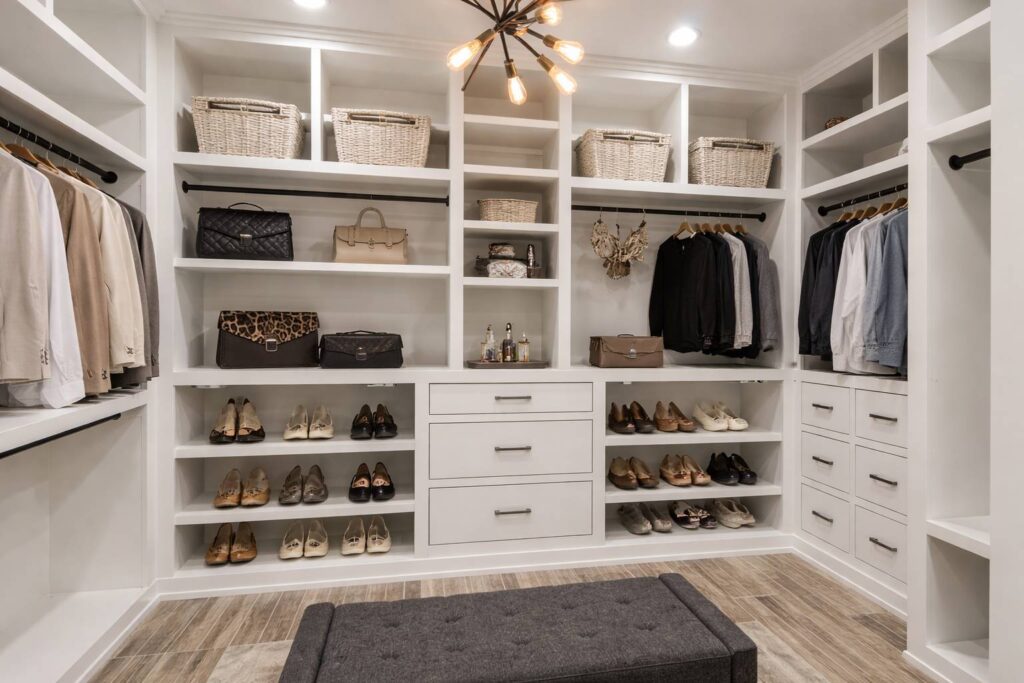
Why Invest in a Custom Closet?
Beyond just “looking nice,” a custom closet solves specific functional problems. Standard builder-grade closets usually consist of a single rod and a plank of wood – a setup that wastes up to 40% of usable space.
Here is why upgrading matters:
- Maximize Storage Space: By utilizing vertical space from floor to ceiling, you can often double your storage capacity without changing the footprint of the room.
- Protect Your Wardrobe: Proper spacing, specialized racks, and drawers keep clothes free of wrinkles, dust, and damage.
- Increase Home Value: Storage is a top priority for homebuyers. A well-designed custom closet system is a “sticky” feature that adds tangible resale value.
- Save Time: The average person spends significantly less time getting ready when every item has a designated “home.”
The Two Main Contenders: Walk-In vs. Reach-In
Understanding the canvas you are working with is the first step in the design process.
1. The Walk-In Closet
The ultimate dream for many, a walk-in closet is a room into which you can step to access your wardrobe.
- Best for: Master bedrooms and larger suites.
- Key Potential: If space allows, walk-ins can accommodate luxury features like center islands for folding laundry, bench seating, and 360-degree mirrors.
- Design Tip: Zoning is critical here. You need distinct “zones” for hanging (long vs. short), shelving, and drawers to prevent the space from feeling like a messy boutique.
2. The Reach-In Closet
Common in hallways, guest rooms, and older homes, these are closets you stand in front of rather than inside.
- Best for: Maximizing efficiency in smaller footprints.
- Key Potential: Because depth is limited (usually 24 inches), the goal is accessibility. High-tech features like pull-down rods and soft-close drawers can make a small reach-in feel surprisingly spacious.
- Design Tip: Replace traditional swinging doors with sliding doors to free up floor space in the bedroom.
Anatomy of a Perfect Closet: Key Features
What actually makes a closet “custom”? It is the combination of specialized components tailored to your specific inventory.
1. Double Hanging Rods
This is the easiest way to double your storage. By stacking two rods (one high, one low), you can hang shirts and jackets on top, and pants or skirts on the bottom, utilizing the same vertical strip of wall.
2. Adjustable Shelving
Fixed shelves are the enemy of organization. Custom systems use drilled panels that allow you to move shelves up or down. As your wardrobe changes-bulky sweaters in winter, light tees in summer-your closet adapts with you.
3. Specialized Accessories
These are the game-changers that add that “wow” factor:
- Valet Rods: A retractable rod that slides out to hold your outfit for the next day or dry cleaning.
- Jewelry and Watch Drawers: Velvet-lined trays that protect valuables and keep them organized.
- Tilt-Out Hampers: Hide dirty laundry behind a sleek cabinet door, keeping the floor clear.
- Shoe Fences: Angled shelves with small rails (fences) that display footwear visibly while preventing them from sliding off.
The Process: From Chaos to Order
If you decide to go the custom route, here is what you can generally expect from the process:
- The Inventory Assessment: You cannot design a closet until you know what goes in it. Do you have 50 pairs of shoes or 5? Do you hang your jeans or fold them? A good designer starts here.
- The Design Phase: Using 3D software, the layout is planned to ensure no “dead corners” exist. This is where you choose finishes (colors, wood grains) and hardware (handles, knobs).
- Installation: Unlike a DIY wire kit, professional installation ensures the system is anchored securely to the studs, capable of holding the significant weight of a full wardrobe.
A custom closet is more than just a place to store shirts; it is an investment in your peace of mind. By creating a system that works for you rather than against you, you start every day with a little less stress and a lot more style.
Get A Quote
Stop working around your space and start enjoying it. Let’s design a custom closet tailored to your wardrobe, layout, and daily routine.