We hear this at design appointments and it is a fair thing to say. Somebody has been to a big-box store, priced a flat-pack closet system, and the number is a fraction of ours.
They are not wrong about the number. The comparison is just measuring two different products against each other, and the difference only shows up later.
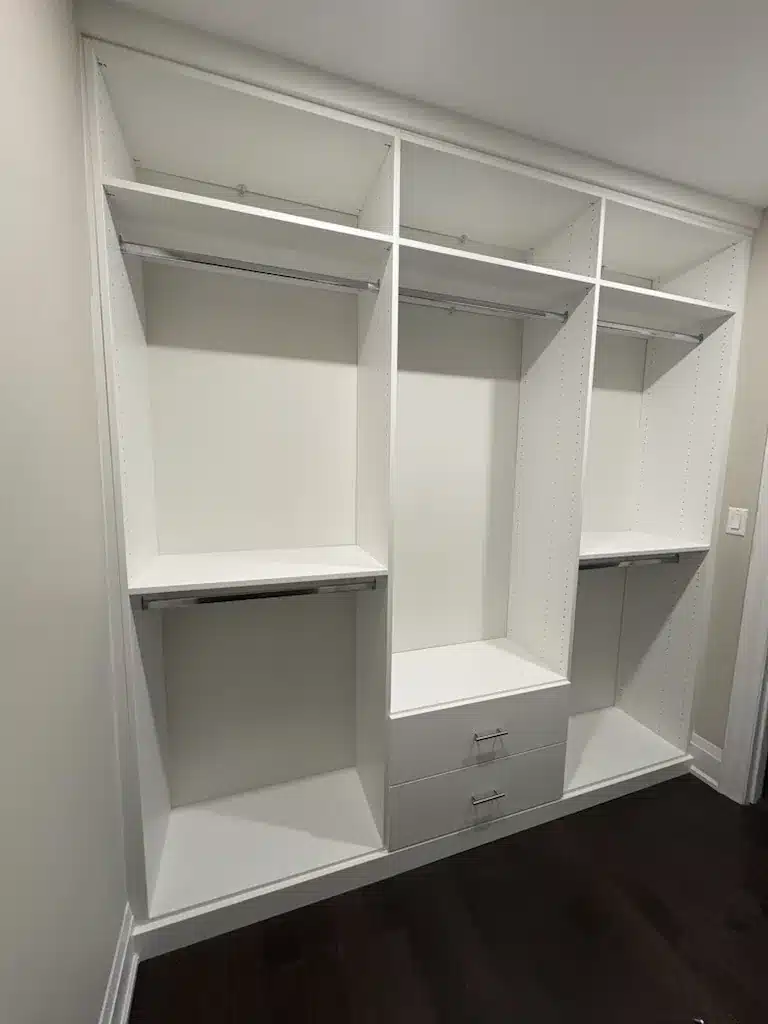
A reach-in built to the opening. The flat-pack version of this wall is the comparison most people are actually making.
What the Flat-Pack Price Actually Covers
Lower upfront cost, and that is a real advantage, not a trick. If you need storage in a rental, a first condo, or a room whose purpose you expect to change in a few years, flat-pack is often the correct decision and we will say so.
What the price does not cover is the labour. You measure, you collect, you haul, you assemble, you discover the wall is not plumb, you shim it. That time is real even though it never appears on a receipt, and anyone who has spent a Saturday on it knows exactly what it is worth.
The other thing the price does not cover is the second purchase. A flat-pack system typically lasts five to seven years before the panels sag, the edges swell where they have been touched by damp air, and the whole thing gets taken out and replaced. Then you buy it again.
It also does nothing for the value of the house. It is a possession sitting in a room rather than part of the building.
What Custom Costs and What It Buys
Higher upfront, industrial-grade, built to stay where we put it.
We measure, we cut, we order, we transport and we install. Nobody hands you a box. The components are made on CNC equipment for a house that is not square, which is every house, and every cut edge is banded so it is sealed rather than raw board exposed to Ontario humidity.
Because it is built in and built to last, it reads as part of the house rather than furniture in it. That is the part that shows up when you sell.
The Comparison, Side by Side
| Flat-pack | Custom from our shop | |
|---|---|---|
| Upfront cost | Lower | Higher |
| Typical service life | About 5 to 7 years, then replaced | Built to stay |
| Who does the labour | You | We do |
| Fits a wall that is not plumb | With shims and patience | Cut to the measurement |
| Adds value to the house | No | Yes |
| Cost pattern | Recurring | One time |
The Part About Your House
For most Canadians the house is the most important retirement asset they own, which changes how a built-in should be judged.
In a soft market, which is the market Ontario is in right now, quality built-ins help keep a home saleable and help protect the price you can hold. That matters more when buyers have options than it does when they do not.
In a rising market there is a real chance of recovering the whole investment and then some. It is the same logic that makes flipping work, applied to one room instead of a whole house.
Neither of those applies to a flat-pack system, because a five-to-seven-year product is not an improvement to a building. It is a thing you own.
Where Flat-Pack Wins Outright
Being straight about this, since a comparison where one side wins every row is not a comparison.
Flat-pack is the better call when the space is temporary, when you are renting, when the room’s purpose is likely to change, or when the budget for the whole room is smaller than the foundation price of a custom build. In those situations we would rather tell you than sell you.
It also wins on speed. You can have it this weekend. We cannot, because we measure first, then make it.
The Honest Middle Ground
The comparison people usually should be making is not flat-pack against a fully loaded custom closet. It is flat-pack against our foundational build.
That is the function-first version: three-quarter-inch TFL panels, a chrome oval rod, shelving, in white. No doors, no glass, no lighting, no drawer banks. It is the cheapest thing we make and it is a finished, working closet the day we leave. It is also the version we quote first on every job, before anyone starts talking about colour.
Priced against a flat-pack system that gets replaced twice over the same period, that is a much closer comparison than most people assume when they walk in with a big-box quote. Ask us for that number specifically. It is the honest version of the question, and the rest of the arithmetic is on what a custom closet costs in Ontario.