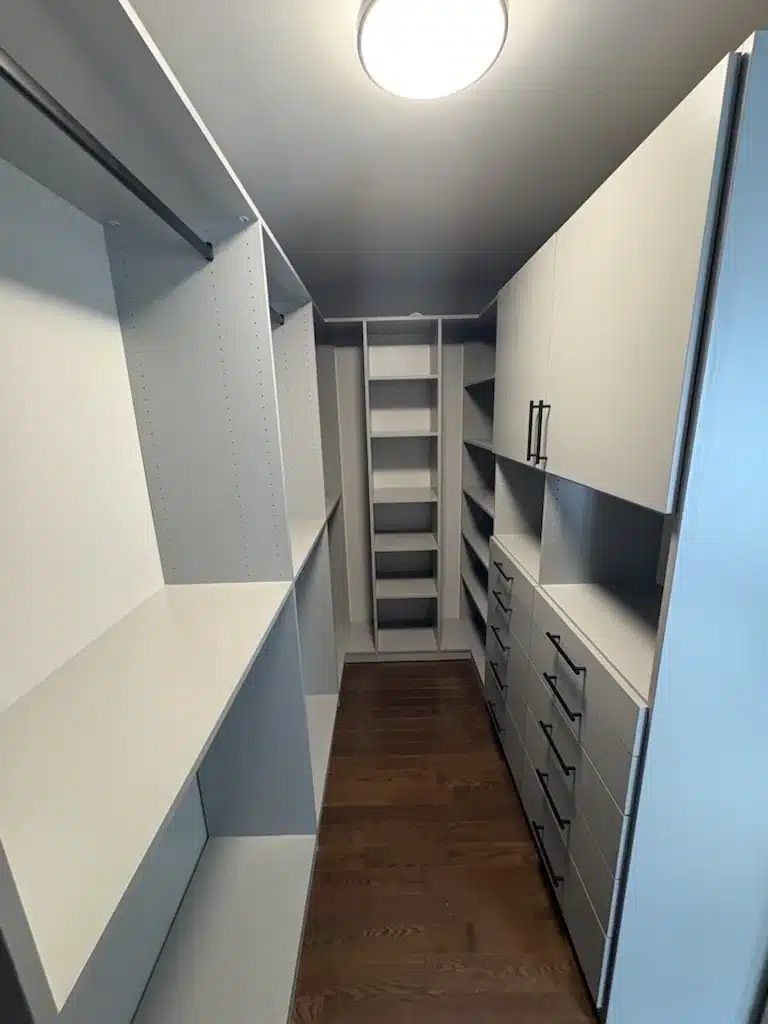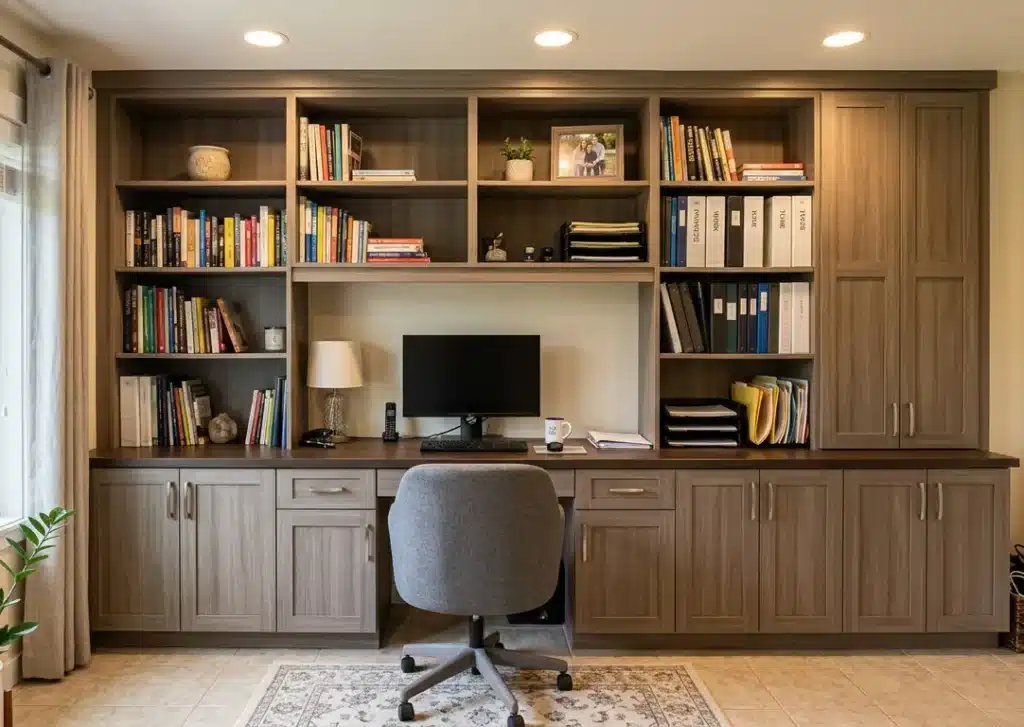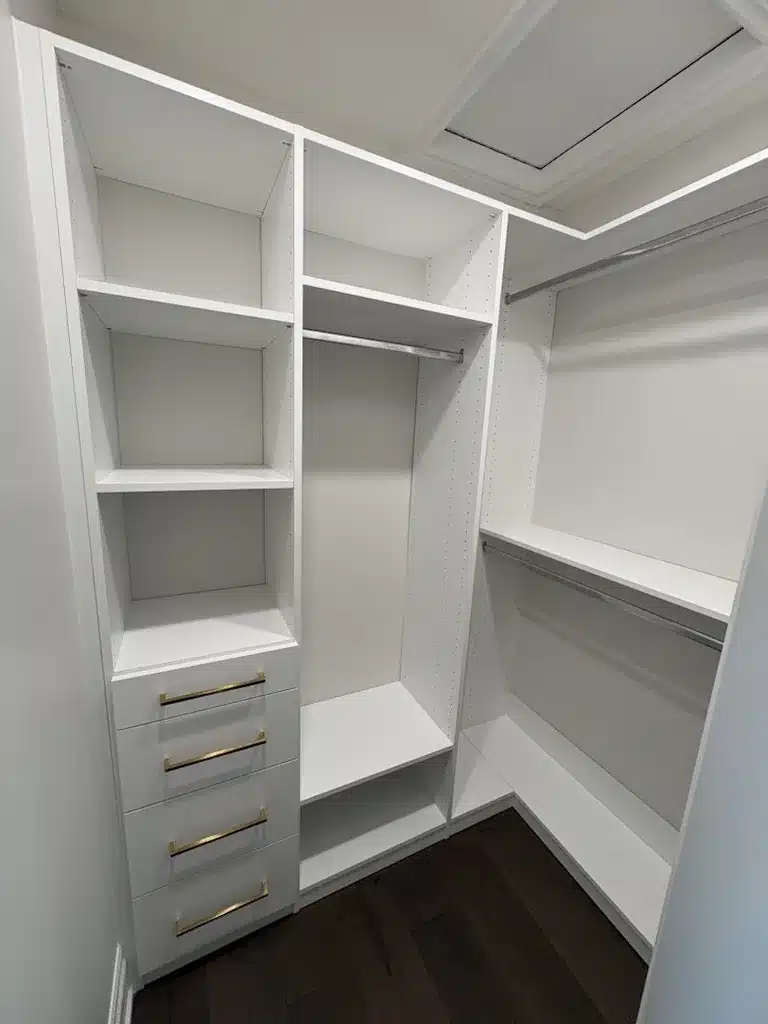
A design appointment ends the same way every time. The drawing is done, the colour is picked, and there is a number on the sheet. What we build runs from about $4,000 to $40,000 and up, so that number can be a rounding error in a renovation budget or it can be the biggest single line in it.
Then comes the second question, which is usually quieter than the first. How do you actually pay for it?
There are two ways to pay us, and one of them involves a lender. Before you get to either, it helps to know something about how retail financing works, because the version most people have been sold is not the version that exists.
The 50-50: Half at Order, Half After Installation
Half of the price when you order, half once the installers have finished and packed up.
No lender, no application, no credit check, and no interest of any kind. Plenty of our customers pay this way, and for anyone who has the money sitting there it is the cheapest route by a distance, because nothing has been added to it.
The second half is the part worth noticing. It isn’t due when we start building, and it isn’t due when the truck pulls into your driveway. It comes due after the work is in your house and you have looked at it. If something is wrong on installation day, we are fixing it while we are still holding half the money, which is the arrangement you want to be in.
The tradeoff is real too. It means having the money available in two chunks inside the span of the project, and on a larger kitchen or a whole-house job that is a genuine cash-flow question rather than a formality.
The Other Way: Monthly, Through a Lender
The alternative is financing, arranged through FinanceIt, a Canadian consumer lender based in Toronto. They do the underwriting, they hold the loan, and your payments go to them rather than to us.
If you want to go that route, tell your designer at the table. The application runs on a tablet in your kitchen and takes a few minutes. All financing is on approved credit, and the term and the exact payment are in writing on the agreement before you sign anything.
Two things people ask about, so here they are up front. We never see your credit report; your designer is told whether the application was approved, and that is all. And FinanceIt funds us after the install is finished, so we are never paid ahead of the work being done.
The Part Nobody in Retail Says Out Loud
One of our designers spent 23 years in the car business before he started drawing closets, which means he arrived here already knowing where the money in a financing offer goes.
His view, more or less word for word: in the car business there is no such thing as zero percent. It doesn’t exist. It is built in somewhere.
The reason is dull once you see it. Lenders do not lend money for free. When a retailer advertises a rate below what the lender charges, somebody pays the lender the difference, and that somebody is the retailer. It is a fee, it comes off the sale, and it is a standard part of how consumer finance works in cars, furniture, appliances and cabinetry alike.
So a subsidised rate is never free money. It is money that has been paid by the seller instead of by you. The only question left is whether the seller absorbed that cost or quietly recovered it in the price, and that question has different answers at different companies.
None of this is a scandal. It is arithmetic, and it is the sort of arithmetic that is easier to see in a car dealership than in a closet showroom, which is why having a former finance manager on the design team turns out to be useful.
So Who Pays It Here
On the plans where the interest is carried by us rather than charged to you, that is a cost we have taken on, and we would rather carry it than watch a project not happen over timing. That is the honest description of it.
What it is not is free. Money that pays interest is money, and pretending otherwise would make us exactly the sort of advertiser the paragraph above is about. Ask your designer which plan applies to your project and what it looks like in writing on the agreement, because that document is where the real answer lives, not a headline number on anybody’s website.
Our financing page says something most companies in this business would leave off, and we mean it: if you can pay for the project without straining the month, pay directly. Interest is a real cost. It does not make the closet hold one more sweater.
Four Questions Worth Asking, Here or Anywhere
If you are comparing quotes and one of them comes with a financing offer attached, these are the questions that tell you what you are looking at.
Who is the lender, and who holds the loan? A third-party lender that underwrites and collects is a different animal from a retailer carrying its own paper. Ours is FinanceIt, and they hold it.
Is the term and the payment on paper before I sign? It should be, in writing, on the agreement, without you having to ask twice.
When does the company get paid? Before the work or after it. This matters more than the rate does. A company funded on completion has a reason to finish properly.
Are there application or administration fees on top? Ask plainly and ask for the number.
Which One We’d Point You At
It depends on which problem you have.
If the money is available, take the 50-50 and skip the lender entirely. Nothing is cheaper than not borrowing.
If the money is available but not this month, or not in two chunks, financing is doing exactly what it is for. Spreading a cost so a project happens this year instead of theoretically next year is a legitimate reason to use credit, and it is the reason we hear most often at the table.
If the number itself is the problem, neither option is the fix. Every quote we write starts from the white, function-first version and prices each addition separately, which is the whole subject of what a custom closet costs in Ontario, and it means there is almost always a smaller build in there that you can pay for outright. A longer term on a closet you couldn’t afford is not a solution and we won’t pretend it is. We would rather sell you the version you can pay for and keep the phone number.
Start with the number, then decide how to pay for it. A designer comes to your house, measures the room and prices it, and that part costs nothing either way. Book a free consultation or call 705-315-9169, and the payment details are all on our financing page.