A short-term unit and a long-term rental can be the same four walls and still be two different products.
The short-term version is built around a suitcase. Somebody arrives on a Thursday, lives out of a bag, uses maybe a quarter of the closet, and leaves on Sunday. Under that assumption a lot of choices make sense. A rod with eight hangers on it. A dresser where two of the four drawers actually open. A kitchen stocked for a weekend. Plenty of decor doing work that storage would otherwise have to do.
Then the arithmetic changes. Municipal rules tighten, cleaning and turnover eat the margin, the calendar develops more gaps than it used to, and a twelve-month lease starts to look like the better business.
Most of that conversion is subtraction, and it’s cheaper than owners expect. A few parts are additions. The order is what people get wrong, because the temptation is to start with the things that photograph, and the things that photograph are not the things that get the lease signed.
Start with somewhere to put a life
Somebody signing a one-year lease isn’t arriving with a carry-on. They’re arriving with every coat they own, off-season clothes they won’t touch until November, a vacuum, sports equipment, luggage that now has to live somewhere itself, and the boxes people never quite unpack.
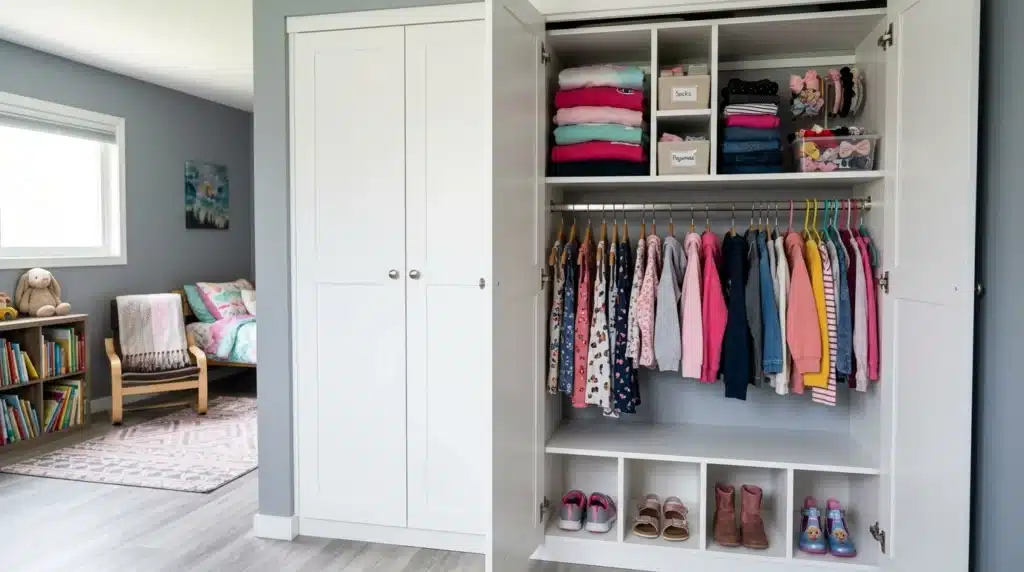
A unit set up for short stays almost never has room for that, and the shortfall doesn’t show up in photographs. It shows up on the second viewing, when somebody opens the bedroom closet, finds one rod at shoulder height above a single shelf, and starts doing mental arithmetic about the cost of a locker.
Storage goes first for a reason that has nothing to do with taste. It’s the only item on this list a tenant can’t solve themselves. They can bring their own furniture. They can live with a paint colour they’d never have picked. They can’t add a closet, and most leases don’t let them fasten anything permanent to a wall, so whatever you hand over is what they’ve got for the year.
In an average one or two bedroom unit the gap sits in the same two places nearly every time.
The bedroom closet is the big one. A reach-in with a single rod and a shelf above it is using about half the air in the box. Double hanging, where the ceiling allows it, gets close to twice the hanging in the same footprint, with adjustable shelves above for what doesn’t hang. If the room has no wall left for a dresser, the drawers go inside the closet and the floor stays clear.
The entry is the other one, and it’s the one owners skip. In Ontario, an entrance with nowhere to put wet boots is the complaint you’ll hear every February, and it’s the first thing anybody sees at a showing. Hooks, a bench with boot storage under it, and somewhere for a coat that isn’t the back of a dining chair.
We’ve set out how we build this so it lasts across several tenancies on our rental property storage page, and the thinking behind keeping it plain is in designing a closet for a tenant you haven’t met yet.
Then take out the parts that read as a hotel
The towel arrangement. The welcome binder. The gallery wall, the throw pillow count, the theme.
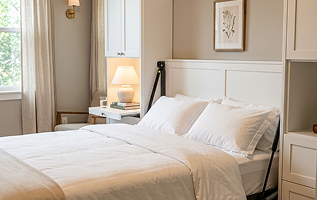
Also the furniture that only worked because nobody stayed long, which usually means the two-drawer dresser, the coffee table with nothing inside it, and the wardrobe rail standing in a corner because the closet was never enough.
Somebody looking at a place for a year is trying to picture their own things in it. A room styled to photograph well for a booking site reads as a set built for somebody else, and it quietly tells a tenant they’re a guest. The fastest version of this fix costs almost nothing: strip the styling back to a neutral base, keep the good lamps, and let the storage do the reassuring.
The unglamorous list that comes after
Once those two are handled, the rest is ordinary landlord work, and it’s worth doing before the listing goes up rather than during the first tenancy.
Somewhere for a vacuum and a mop that isn’t the bedroom closet. A linen shelf. A pantry run in a kitchen that was stocked for weekend guests and never designed to hold a month of groceries. Laundry that a tenant can actually reach and use every week rather than between changeovers.
What it does to the listing
Two effects, and both are worth more than the work costs.
The first is on the page. Fitted closet storage and a photo of an entry with real hooks and a bench are concrete details in a category of listings that mostly say bright and spacious. The second is at the walkthrough, where storage is one of the very few things a prospective tenant physically opens and touches, along with the taps and the front door.
The unit is also empty right now, which is the cheapest it will ever be to do any of this. Our closet installs are a single visit by our own employees rather than subcontractors, and the property is back in service the same day.
If you’re working through a conversion, or through several units at once, the measure and the design cost nothing and you’ll see exactly what fits before you decide. Start at rental property storage, or call 705-315-9169 and we’ll come and look at the space.